The best teams aren't always the ones with the loudest coaches. Sometimes they're the ones where the players have learned how to lead themselves.
Over my years playing and coaching softball, including at the NCAA Division II level and in travel ball, I've come to believe that one of the most important things we can develop in young athletes is the ability to think, communicate, and take ownership of what's happening on the field.
We spend a lot of time teaching players what to do.
Get the free workbook
Free download: The Next Rep Workbook
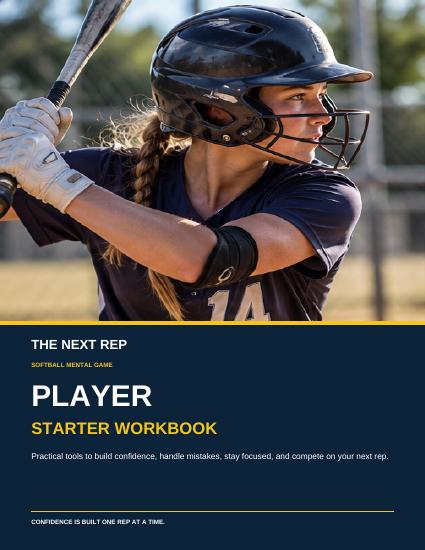
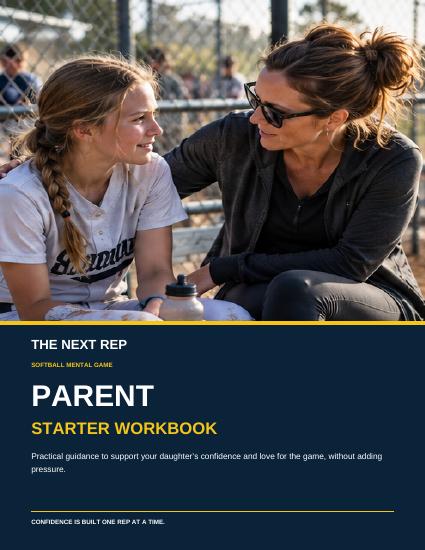
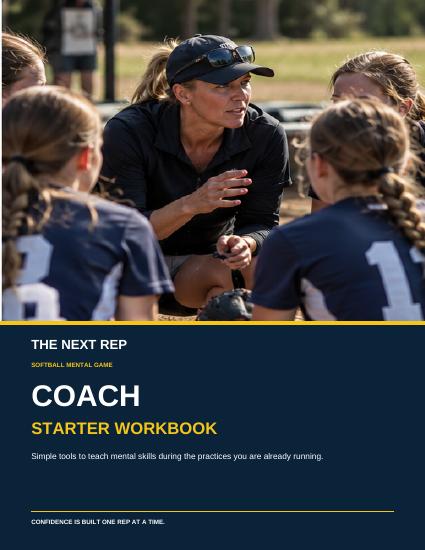
Get the free workbook made for you: player, parent, or coach.
Where to throw the ball. How to approach an at-bat. Where to position themselves defensively.
But are we teaching them how to make decisions when we're not standing next to them?
Are we giving them opportunities to communicate, solve problems, support teammates, and hold each other accountable?
Or are we doing all of that for them?
That's where player-led teams come in.
What Is a Player-Led Team?
A player-led team isn't a team where the coach steps aside and lets the players do whatever they want.
Coaches still establish expectations, teach fundamentals, provide structure, and hold players accountable.
But instead of relying on the coach to direct every conversation, solve every problem, or provide every answer, players gradually learn to take responsibility for their own preparation, communication, and performance.
They understand their roles.
They communicate with one another.
They recognize when something needs to change.
And they know how to respond when things aren't going well.
That's leadership.
And just like hitting, throwing, or fielding, it's something we need to teach.
Why Player-Led Teams Matter
1. Players Learn to Think for Themselves
Softball is a game of constant decisions.
A catcher has to read a situation and communicate with her pitcher. An infielder has to know where the next play is. A baserunner has to recognize an opportunity and react.
We can't make every decision for them.
And if we constantly give players the answers during practice, how can we expect them to make those decisions independently during games?
One of the simplest things coaches can do is ask more questions.
"What did you see?"
"What was your plan?"
"What could we do differently next time?"
Then give players an opportunity to work through the answer.
That doesn't mean withholding instruction when they need it. It means recognizing when a question can teach more than another lecture.
2. Accountability Becomes a Team Responsibility
On a coach-led team, accountability can become something that only happens when the coach steps in.
On a player-led team, athletes begin to understand that their preparation, effort, communication, and attitude affect everyone around them.
They learn to hold themselves accountable and support teammates in doing the same.
But here's the important part.
Accountability shouldn't mean embarrassing a teammate or calling someone out for making a mistake.
It means being able to have constructive conversations, recognize when the team isn't meeting its expectations, and take action to improve.
Coaches have to model that first.
3. Players Learn How to Respond to Adversity Together
Think about what happens when a team gives up four runs in an inning.
Does everyone look toward the dugout, waiting for the coach to tell them what to do?
Or do the players know how to regroup?
Can the catcher settle the pitcher?
Can the infield communicate the next situation?
Can teammates encourage one another without pretending the inning is going great?
Those responses don't happen automatically.
They come from creating an environment where players have practiced communicating and responding to difficult moments.
And that's a big part of mental training.
4. Leadership Becomes Something Every Player Can Develop
Not every player is naturally vocal.
Some athletes are comfortable speaking in front of the team. Others lead through preparation, consistency, effort, or one-on-one conversations.
I don't believe leadership should be reserved for the loudest player or the most talented athlete.
We need to give everyone opportunities to develop it.
A younger player can lead a warm-up.
A quiet player can help organize a defensive station.
A catcher can lead a conversation about communication.
A bench player can contribute valuable observations during a game.
Leadership isn't one personality type.
And it shouldn't be limited to whoever wears the captain's title.
Five Ways to Develop a Player-Led Team During Practice
Here's the good news: you don't need to add another practice or spend 30 minutes talking about leadership.
You can build these skills into what you're already doing.
1. Let Players Lead the Warm-Up
Mental skill: Ownership and communication
Choose two players to lead the team's regular warm-up.
Give them clear expectations about timing, organization, and what needs to be accomplished.
Rotate the responsibility so everyone gets an opportunity.
Afterward, ask:
"What went well? What would you do differently next time?"
You're teaching preparation, communication, and accountability without adding anything to your schedule.
2. Have Players Run a Situational Defense Conversation
Mental skill: Decision-making and communication
Before a situational defense rep, give players a game situation.
Runner on second. One out. Tie game.
Instead of immediately telling everyone where the play is, ask the players to communicate their responsibilities.
Let the catcher or an infielder lead the conversation.
Then run the play.
Afterward, ask what they noticed.
The coach can still correct misunderstandings, but players should have opportunities to work through situations together.
3. Teach Players to Lead a Reset
Mental skill: Emotional regulation and team support
When things go wrong, players need to know how to regroup.
At The Next Rep, we teach a simple routine:
RELEASE → RESET → ATTACK
Release the previous play.
Reset your attention.
Attack the next opportunity.
Now take that concept one step further.
Teach players how to help teammates reset.
A catcher might walk to the circle and ask, "What's our next pitch?"
An infielder might remind the team, "One out. Play's at first."
A teammate might simply say, "We've got the next one."
The goal isn't to have players constantly giving each other motivational speeches.
It's to teach them how to communicate in ways that help the team move forward.
4. Give Players Ownership of One Practice Goal
Mental skill: Goal-setting and accountability
At the beginning of practice, ask players to identify one team goal.
Maybe it's communicating before every defensive rep.
Maybe it's staying engaged between pitches.
Maybe it's using their reset routines after mistakes.
At the end of practice, ask:
"How did we do?"
"What helped?"
"What do we need to improve?"
Let the players talk first.
This helps them recognize that team standards are something they actively contribute to, not just rules handed down by a coach.
5. Let Players Solve Small Problems
Mental skill: Problem-solving and confidence
When a drill isn't going well, resist the urge to immediately stop everything and give the solution.
Ask:
"What are you noticing?"
"What's not working?"
"What adjustment should we try?"
Give them a chance to suggest a solution.
Then let them test it.
Of course, coaches still need to step in when there's a safety issue or players don't have the knowledge to solve the problem.
But we should be looking for opportunities to develop independent thinkers.
How The Next Rep Helps Coaches Build Player-Led Teams
This is one of the reasons I created The Next Rep.
I don't believe mental training should be something we introduce only when players start struggling.
And I don't believe it needs to be another hour added to an already busy practice schedule.
Mental skills should be taught alongside the physical skills we're already developing.
When we teach players how to reset after mistakes, we're helping them become more independent.
When we teach constructive self-talk, we're helping them learn to coach themselves.
When we practice communication, we're giving them tools to support teammates.
When we ask players to reflect and make adjustments, we're developing their decision-making skills.
And when we teach accountability alongside support, we're helping them understand what it means to be part of a team.
These are all building blocks of player leadership.
Through The Next Rep, I want coaches to have practical drills, coaching scripts, and activities they can incorporate into their existing practices.
Not another lecture.
Not another hour.
Just intentional opportunities to develop the mental side of the game.
A Final Thought for Coaches
One of the biggest questions I think we should ask ourselves is:
Are we developing players who can think and lead for themselves, or players who are constantly waiting for us to tell them what to do?
There will always be times when coaches need to step in, provide direction, and make difficult decisions.
That's part of our responsibility.
But our goal should also be to help players become more capable, more independent, and more confident in their ability to handle the game.
Because eventually, they're going to be in a situation where they have to make a decision without us.
And I want them to be ready.
Confidence Is Built One Rep at a Time.
Want this on paper? Get the free workbook.
These tools are educational and are not a substitute for mental health care.